








Latest Stories

-
 A French expatriate promised her nephews Ohio Valley acreage if they made the voyage, entreating them to bring along apricot cuttings and eau de cologne.


-
 From Gleason's Pictorial, May 3, 1851 Photomural from woodcut Prints and Photographs DivisionAlthough most of his contemporaries had no interest in abolition and little sympathy for slaves, Harding tried to persuade hostile audiences across Indiana.

-
 Nearly one in seven Hoosiers attended the 1893 Chicago World's Fair during its run.

"Moment of Indiana History" was a weekly two-minute radio program exploring Indiana History. The series was a production of WFIU Public Radio in partnership with the Indiana Public Broadcasting Stations (IPBS).
The program began as a co-production of WFIU, Bloomington, and WBAA, West Lafayette as a module to air on IPBS radio stations. From 2007 to 2014, the series was produced by WFIU for broadcast by IPBS stations as well as other entities interested in Indiana history. Now being re-released every Wednesday and Saturday.
-
-
 Historians concur that there were many Southern sympathizers in Indiana. Whether they were plotting the violent overthrow of the state government is unclear.
 -
 Blackford’s greatest contribution to the development of the state’s jurisprudence came through his work as the first reporter of Indiana decisions.
 -
 New Albany promoted itself as the "real head of navigation on the Ohio-Mississippi system". But merchants never realized their steamboat dreams.
 -
 In 1840, Indiana's population was so concentrated in the south that one-half of the settlers lived within seventy-five miles of the Ohio River.
 -
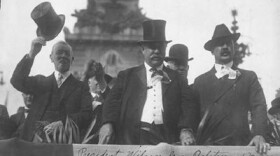 Two groups in particular saw a golden opportunity in Indiana's centennial celebration: conservationists and the good roads movement.
 -
 An epic tale by a Civil War general spawned a marketing frenzy that set a precedent for the commercial campaigns accompanying every blockbuster movie today.
 -
 A number of factors brought people to the doors of the poorhouse, including sickness and age, abusive relationships, and the vagaries of agricultural work.
 -
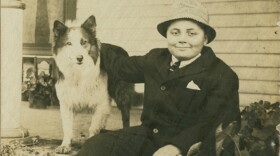 IU's legendary president Herman B Wells didn't set out to be a university administrator. According to his father, he was “practically raised in a bank”.
 -
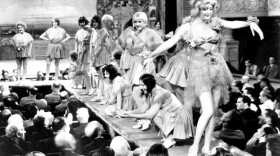 As films became increasingly risqué in the Roaring 20s, Hollywood attempted to preempt governmental intervention with a self-regulating system, the Hays Code.


A Moment of Indiana History is a production of WFIU Public Radio in partnership with the Indiana Public Broadcasting Stations. Research support comes from Indiana Magazine of History published by the Indiana University Department of History.