












A Moment of Science
Latest Stories


Mauricio Antón
The distant past is poorly known, and paleontologists find fossil evidence for new large animals all the time.
-
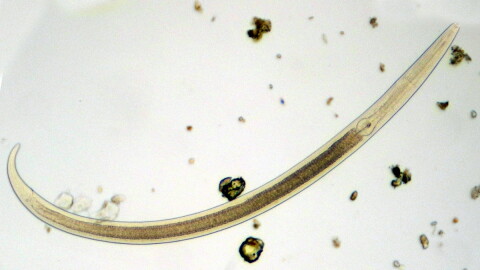 Philippe Garcelon/FlickrThere are several organisms in the animal kingdom that move with a certain synchronization. Learn more about the wave of the vinegar eels with today's A Moment of Science.
 -
 Jacob Better/FlickrDo you find it difficult to tell a lie? Research shows telling one in a different language may be easier.


We‘ve all hit our “funny bone.” Why does it feel like that? What do bicycles, footballs, and space shuttles have in common? Can you really learn while you are asleep? Why do some birds hop and others walk?
These and literally thousands of other questions about the world we live in are answered in A Moment of Science. If you are even a little bit interested in the world around you these two-minute radio programs are just for you – and you don‘t need to know anything about science!
Since 1988, WFIU has produced A Moment of Science at Indiana University, Bloomington, in cooperation with IU‘s scientific community, and scientists around the world.
-
 Fruit flies might not have manners when they invade your home, but they do have culture.
 -
 Find out more about this member of our family tree with today's A Moment of Science!
 -
 Learn more about the unique geological formation known as pingos with today's A Moment of Science!
 -
 Resting heart rate is different for babies versus adults. Why is that exactly?
 -
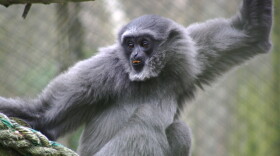 The traditionally dark fur of the howler monkey is starting to get light yellow patches. Scientists look into why this is happening.
 -
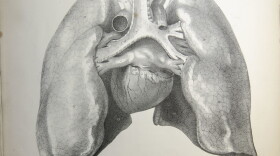 When you get a cut, your cells quickly start to divide and heal. What does this process look like for our internal organs?
 -
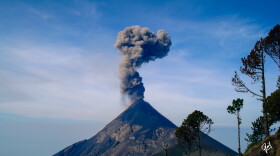 Researchers look to the geological evidence from the Paleocene-Eocene thermal maximum to inform policies for our future.
 -
-
 Having background noise is helpful for some to get to sleep. What exactly is white noise, and why does it impact our quality of rest?
 -
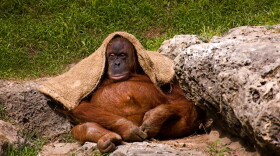 How does popularity work in the animal kingdom? For orangutans, there might be a few similarities to human behavior.


