










The State of Inquiry
Latest Episode

What does it mean to move from using AI tools to managing AI agents, and how do we keep our voice, judgment, and purpose at the center?
State of Inquiry is a video and audio podcast from Indiana Public Media that brings Indiana University research to life. Each mini-season explores a timely theme—like artificial intelligence, public health, or global economics—through in-depth conversations with IU experts. Designed for curious listeners, the show highlights how IU research shapes Indiana, the nation, and the world.
AI & You 2.0

AI & You 2.0 (1 of 5): The Age of Accelerated Transformation
Host Dr. Kevin Jones examines how AI is rapidly reshaping our world in what he calls the Age of Accelerated Transformation.

AI & You 2.0 (2 of 5): The Supervisor Mindset
What does it mean to move from using AI tools to managing AI agents, and how do we keep our voice, judgment, and purpose at the center?
Rural Indiana

Rural Indiana (1 of 4): Rural Resilience
A conversation about the pressures facing rural communities and the innovative ways residents and local leaders are building stronger, more sustainable futures across Indiana.

Rural Indiana (2 of 4): Rural Public Health
An in-depth look at rural Indiana’s greatest public health challenges and how Indiana communities are building solutions that fit their needs.

Rural Indiana (3 of 4): The Local News Landscape
A conversation about how rural residents engage with local news, why trust is shifting, and what it means for civic life and the future of journalism.

Rural Indiana (4 of 4): What We Grow
Explore how land, food systems, and rural values shape decision-making across Indiana’s agricultural communities.
Hope in Progress

Hope in Progress (1 of 6): Stem Cells, Tumors, and Survival
Learn how a better understanding of temperature, environment, and other factors can have dramatic effects on scientists’ ability to advance cancer research.

Hope in Progress (2 of 6): Trials and Treatment
Triple-negative breast cancer is aggressive and hard to treat. How are new therapies and early phase clinical trials changing what’s possible for patients?

Hope in Progress (3 of 6): Lung Cancer Before and After
How does our understanding of environmental exposures and our own hormones shape how we can predict, detect, and treat lung cancer?

Hope in Progress (4 of 6): Cancer’s Hidden Switches
What if the most important drivers of cancer aren’t mutations in DNA, but the chemical switches that control how cells read that DNA?

Hope in Progress (5 of 6): Cancer Cell Metabolism
How does our metabolism affect cancer growth? How do cancer cells “eat” and how do they communicate and compete with other cells? Learn about the latest research into how cancer cells adapt at a metabolic level, using nutrients to proliferate, evade cell death, and persist after therapy.

Hope in Progress (6 of 6): DNA Damage and Repair
What if you could make cancer cells more vulnerable by targeting DNA repair?
AI & You

AI & You (1 of 4): Education and Learning Technologies
How can AI empower both teachers and students, now and in the future? Kevin Jones hosts guests Cindy Hmelo-Silver and Anne Ottenbreit-Leftwich.

AI & You (2 of 4): Human-Centered AI
How can AI-driven technologies be designed to better serve aging populations and improve health outcomes? Kevin Jones hosts guests Aqueasha Martin-Hammond and Fawzi BenMessaoud.

AI & You (3 of 4): Interactive Intelligence
How is AI reshaping the ways we work, make decisions, and collaborate? Kevin Jones hosts guests Alan Dennis and David Crandall.

AI & You (4 of 4): Workforce Innovation
How is AI reshaping the workforce and where it is headed next? Kevin Jones hosts guests Sagar Samtani and Kun Huang.
All Episodes
-
 What does it mean to move from using AI tools to managing AI agents, and how do we keep our voice, judgment, and purpose at the center?
 -
 Host Dr. Kevin Jones examines how AI is rapidly reshaping our world in what he calls the Age of Accelerated Transformation.
 -
 Explore how land, food systems, and rural values shape decision-making across Indiana’s agricultural communities.
 -
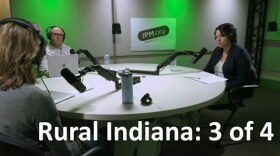 A conversation about how rural residents engage with local news, why trust is shifting, and what it means for civic life and the future of journalism.
 -
 An in-depth look at rural Indiana’s greatest public health challenges and how Indiana communities are building solutions that fit their needs.
 -
 A conversation about the pressures facing rural communities and the innovative ways residents and local leaders are building stronger, more sustainable futures across Indiana.
 -
 What if you could make cancer cells more vulnerable by targeting DNA repair?
 -
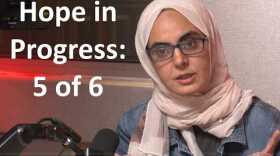 How does our metabolism affect cancer growth? How do cancer cells “eat” and how do they communicate and compete with other cells? Learn about the latest research into how cancer cells adapt at a metabolic level, using nutrients to proliferate, evade cell death, and persist after therapy.
 -
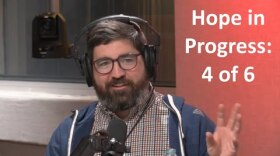 What if the most important drivers of cancer aren’t mutations in DNA, but the chemical switches that control how cells read that DNA?
 -
 How does our understanding of environmental exposures and our own hormones shape how we can predict, detect, and treat lung cancer?


