
-
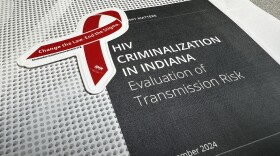 The analysis from the Williams Institute at the UCLA School of Law looked at the risk of transmission associated with Indiana’s six criminalization laws. The report found the laws were based on outdated science on how HIV is transmitted.
 -
 There are six laws that criminalize HIV in Indiana — which include both public health and criminal codes.
 -
 It led to more convictions than in five other studied states.
 -
 Other parts of the bill completely eliminate criminal penalties for donating blood or semen when you know you have HIV.
 -
 Adams served as surgeon general under President Trump and led the Indiana State Department of Health’s responses to Ebola, Zika, and HIV.
 -
 Because many of Indiana’s laws only increase penalties when someone knows they have HIV, people won’t get tested just to avoid legal issues.
 -
 An attorney for the Town of Clarksville is denying allegations that it revoked a job offer to a prospective police officer because of his HIV diagnosis.
 -
 The federal government is accusing a southern Indiana town of discriminating against a man with HIV who applied to become a police officer.
 -
 The majority of new HIV infections among transgender people are among Black people, according to data from the CDC.
 -
 Six years ago, Scott County became the first place in the state to set up a needle exchange. At the time, drug users were sharing needles, and it led to the worst HIV outbreak in the state’s history.

© 2026. The Trustees of Indiana University
Copyright Complaints
1229 East Seventh Street, Bloomington, Indiana 47405
Copyright Complaints
1229 East Seventh Street, Bloomington, Indiana 47405
News, Arts and Culture from WFIU Public Radio and WTIU Public Television
Play Live Radio
Next Up:
0:00
0:00
Available On Air Stations


