

Maggie Crady
Associate Producer, Digital-
 Learn how to make a ring of ink in water with today's A Moment of Science!
 -
 Tennis players are known for the noises they make during games. How do these grunts effect their gameplay?
 -
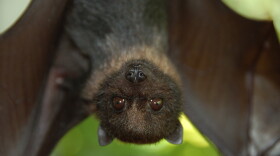 Find out more details of bats' abilities with today's A Moment of Science!
 -
 The epic of Gilgamesh and the quest for eternal youth might have a modern update with new research into skin rejuvenation.
 -
 The distant past is poorly known, and paleontologists find fossil evidence for new large animals all the time.
 -
 Do you picture Tarzan yelling and swinging from vine to vine through a jungle? This mental image has some basis in reality with orangutan behavior.
 -
 Learn more about the Milky Way's center, the supermassive black hole known as Sagittarius A-star.
 -
 Learn more about the relationship between volcanoes, glaciers, and methane.
 -
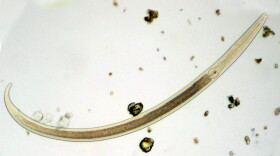 There are several organisms in the animal kingdom that move with a certain synchronization. Learn more about the wave of the vinegar eels with today's A Moment of Science.
 -
 Do you find it difficult to tell a lie? Research shows telling one in a different language may be easier.


