












A Moment of Science
Latest Stories


Ian Jacobs
/
Flickr
Rising temperatures impact some unexpected areas of our lives. Learn more about how climate change effects mosquitoes with today's A Moment of Science.
-
 Topuria Design/Adobe StockToday's A Moment of Science looks closer at the history of refrigeration.
 -
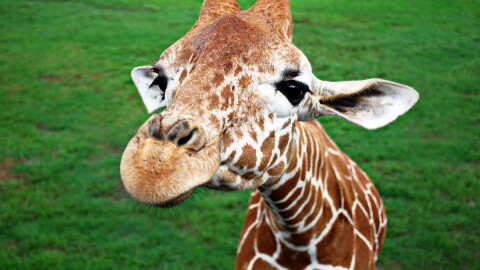 JessicaLee-Photography/FlickrHumans aren't the only ones to send their kids to daycare. Turns out giraffes do the same thing!


We‘ve all hit our “funny bone.” Why does it feel like that? What do bicycles, footballs, and space shuttles have in common? Can you really learn while you are asleep? Why do some birds hop and others walk?
These and literally thousands of other questions about the world we live in are answered in A Moment of Science. If you are even a little bit interested in the world around you these two-minute radio programs are just for you – and you don‘t need to know anything about science!
Since 1988, WFIU has produced A Moment of Science at Indiana University, Bloomington, in cooperation with IU‘s scientific community, and scientists around the world.
-
 How does heat impact our world? In extreme conditions, even railroad tracks can be impacted.
 -
 Pandas are known for essentially just eating bamboo, but was their diet always so selective?
 -
 There’s a big gap between how we act in virtual reality and how we act in real life, as scientists who did an experiment focused on yawning found out.
 -
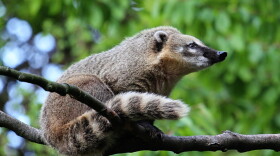 Eavesdropping is usually frowned upon among humans, but not always for animals.
 -
 Learn how to make a ring of ink in water with today's A Moment of Science!
 -
 Tennis players are known for the noises they make during games. How do these grunts effect their gameplay?
 -
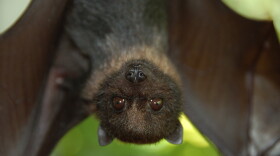 Find out more details of bats' abilities with today's A Moment of Science!
 -
 The epic of Gilgamesh and the quest for eternal youth might have a modern update with new research into skin rejuvenation.
 -
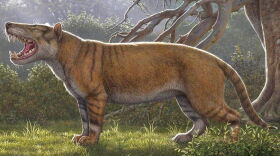 The distant past is poorly known, and paleontologists find fossil evidence for new large animals all the time.
 -
 Do you picture Tarzan yelling and swinging from vine to vine through a jungle? This mental image has some basis in reality with orangutan behavior.


