For storm chaser Nathan Lorenzen of Bloomington, being hot on a storm track and documenting nature’s power boils down to a three-word mantra.
“Don’t get twisted.”
Indiana surpassed most of the country with 90 reported tornadoes this year, according to National Weather Service Storm Prediction Center data. It's the most tornadoes the state has on record in a single year and is second only to Illinois, which had over 200 this year.
Lorenzen is vice president of Indiana Storm Chasers, a statewide weather awareness group focused on safety. The group, with 239,000 followers on Facebook, provides weather forecasting, severe weather education and public safety awareness about storms.
Lorenzen has been a chaser for 17 years, scouting storms across Indiana. For him, he said, his interest in weather was piqued by the danger of severe storms.

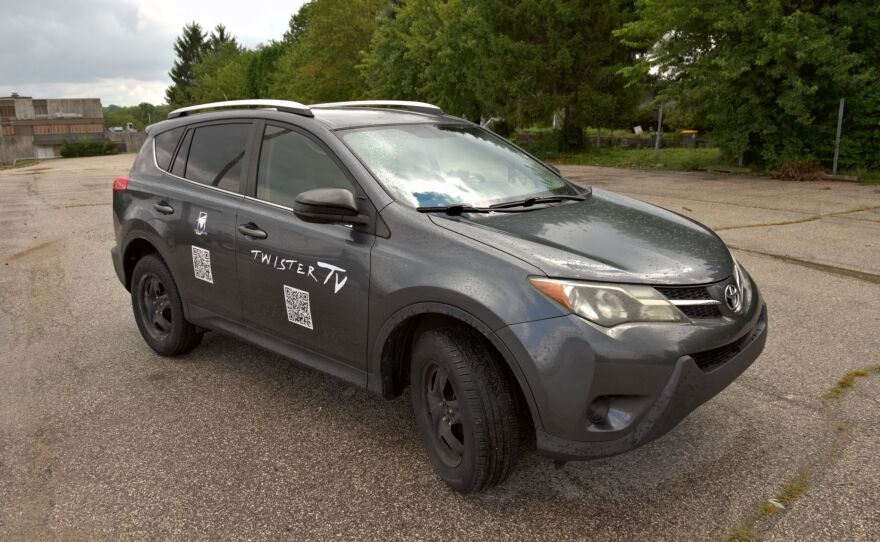
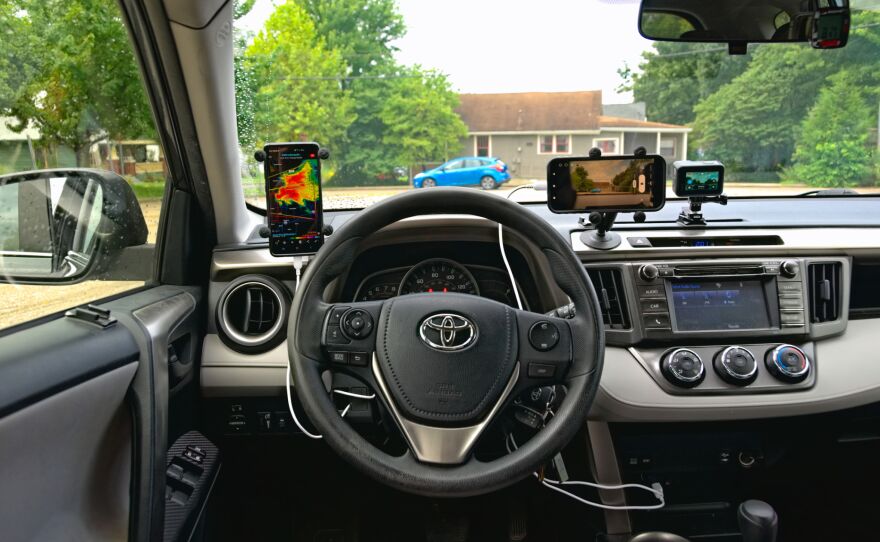
“The fear,” Lorenzen said. “I tell a lot of people that it's a lot like Batman, and how he was so scared of bats. I was scared of tornadoes. I still am, but to a respectful level. But the fear turned into a healthy obsession.”
ISC is one of many local networks filling in the gaps some say more traditional weather media leaves behind for audiences needing timely weather forecasting before and during severe weather.
Indiana Weather Network, with 374,000 followers on Facebook, also provides free weather coverage and forecasting.
President of Operations and storm chaser Ryan Harriott said what drew him to chasing was when he saw a tornado color the sky purple and green. He witnessed a power flash, or a flash of light caused by tornado damage to power lines, transformers or utility poles.
Between that experience and watching Discovery Channel’s “Storm Chasers,” he was hooked. He’s been chasing since 2014.
After COVID-19 took him out of the workforce, he identified a need for weather information on a digital platform.
“Like, ‘Oh, there's people actually do this for a living, huh,’” Harriott said. “And lo and behold, you know, 10 years later, here we are with, you know, a digital meteorology platform that's doing what I love and my passion.”
Harriott started Michigan Weather Network before acquiring staff in Indiana.
“It was just a no-brainer for us to continue to expand and move into Indiana,” he said.
He said a need for digital weather coverage is due in part to limitations in broadcasting, pointing to 24/7 social media and streaming as ways audiences can get information quickly.
“This is not a knock to the broadcast sector at all,” he said. “... We're not trying to quote unquote compete with them. We're just trying to fill gaps and do what we love at the same time.”
Chasing can also help those monitoring radar images to warn those in the path of severe weather.
National Weather Service Senior Meteorologist Mike Ryan said there’s only so much one can tell over radar versus being on the ground, getting live information from spotters and chasers.
“And in some cases, that allows us to accentuate and heighten the warning if we have greater confirmation that we do in fact have a tornado on the ground,” he said.

Ryan pointed to an incident in March 2024 when a storm by the Ohio border produced an EF-3 strength tornado, meaning severe damage and winds of 136-165 mph. After receiving multiple reports from spotters on the ground that a tornado had touched down, NWS Indianapolis upgraded its warning to those in the affected area.
The most significantly damaged area included a Taco Bell, he said, and workers were able to take shelter in a freezer because of the advanced warning.
“That probably saved their lives, or at least kept them from significant injury,” Ryan said. “Those are the success stories we're looking for when we're issuing these warnings.”
In his work, Ryan said the emotional impact of being inside a building watching a storm over the radar can be cumbersome, especially when a storm results in fatalities or injuries.
“I think that sometimes gets lost because you do wonder, you know, ‘Yeah, we had so much lead time on this warning, but what would have happened if we would have had that much more?’” Ryan said. “We're true servants, and ultimately our number one responsibility is protection of life and property.”
Ryan said despite federal funding cuts, the level of service NWS Indianapolis provides Hoosiers is not going to change.
“Part of that is just the relationships that we’ve built with our state partners, our local partners,” he said.
Though chasers provide valuable, real-time information, some challenge a misconception that chasers are all adrenaline junkies that put safety second to getting the scoop on a strong storm.
Storm chasing also attracts aspirants from all over the country, which can put strain on communities during severe weather outbreaks. A phenomenon known as chaser convergence occurs when large numbers of chasers pursuing the same storm crowd into a concentrated area, which can clog roads residents need to get to safety.
Lorenzen acknowledges the downsides of chasing, but said groups like ISC try to set themselves apart through prioritizing safety and public education over getting too close to the action.
“Unfortunately, storm chasing has become somewhat of a desensitized hobby for a lot of people, especially because of big TV shows that glamorize getting really close, getting the extreme (video) shots,” Lorenzen said. “We don't like to do that. We like to stay back. We like to enjoy the storm from a distance and keep it safe.”
Ryan said the true misconception is that anyone with a camera can get in their car and pursue a severe storm.
“That's one reason why the Weather Service does not condone storm chasing. We know what goes on, but we don't condone that because ultimately, we want people to be safe,” he said.
Cody Snyder is actively training to join the ISC network as a storm chaser. He views storm chasers as a “first line of defense” when it comes to reporting severe weather, especially when a tornado touches down.
“It's a lot of doing radar jockeying and you know watching their live streams and kind of learning and just paying attention, trying to pick up some tricks that I can use for the future as I get into it more,” he said.

Snyder said ISC’s live updates are crucial because the traditional formula for tornado warnings can take “precious” seconds residents need to get to shelter.
He said services like ISC's live streaming and real-time alerts mean residents are “not waiting for a news station to come back from a commercial or to interrupt it, or you're in the other room.”
Snyder fell in love with chasing after seeing the movie “Twister” and living through severe weather events. He’s been pursuing storm chasing for about a year, with plans to formally join the ISC umbrella next year after getting SKYWARN certified.
“I've lived through some straight-line winds. I've lived through a couple tornadoes, and I just don't have a fear of it,” he said. “They just fascinate me, and living through them, it gives me a respect for them.”
Severe Weather Resources for South Central Indiana: